What is in the door edge of a 1915 Craftsman
Open the front door of a brown-shingle on a side street off College Ave and look at the edge. Instead of two round holes for a knob and a deadbolt, there is one long brass faceplate with a latch and a bolt behind it. That is a mortise lock, a single steel box let into a pocket in the door, and it has been doing its job since the house was built. Above it there may be a second faceplate for a skeleton-key bolt, and on the inside of the door a rim lock in a cast housing screwed to the wood.
These were the standard hardware of the 1910s and 20s across Rockridge, Temescal, Piedmont Avenue and the older blocks of the Laurel, and they are better made than most of what replaced them. The case is thick steel, the bolt is long, and the knob spindle and the cylinder are separate parts that can each be serviced. The problem is not quality. The problem is a century of paint, dry grease and doors that have settled a quarter inch.
Why they still work, and how they fail
Mortise locks fail slowly and in a few predictable ways. The latch spring weakens and the knob has to be turned twice. The bolt binds because the door has dropped and the strike is a hair too high. The cylinder, if a modern pin cylinder was fitted at some point, wears until the key needs a wiggle. Or the whole case fills with old lubricant that has turned to varnish, and one cold morning the bolt simply will not move. None of these means the lock is done. All of them mean it wants attention.
Rim locks on the inside face fail in their own way: the mounting screws work loose in old fir, the keeper on the jamb bends, and a skeleton-key bolt with no cylinder at all offers little resistance to anyone with a similar key. That last point is the security question. A rim lock with a warded skeleton key is charming and it is not a lock in any modern sense. The mortise bolt beneath it, with a proper cylinder, is the part doing the work.
Rekey, repair or replace
If the mortise lock has a standard pin cylinder, which most in Rockridge do by now, it rekeys like anything else at $21 to $36 per cylinder. The tech removes the cylinder through the faceplate set screw, repins it and puts it back, and the original case stays in the door. If the case itself is binding, it comes out of its pocket, gets cleaned and relubricated, has a spring replaced if one has fatigued, and goes back. That repair is priced in the lock replacement range at $99 to $275, and it is usually toward the low end.
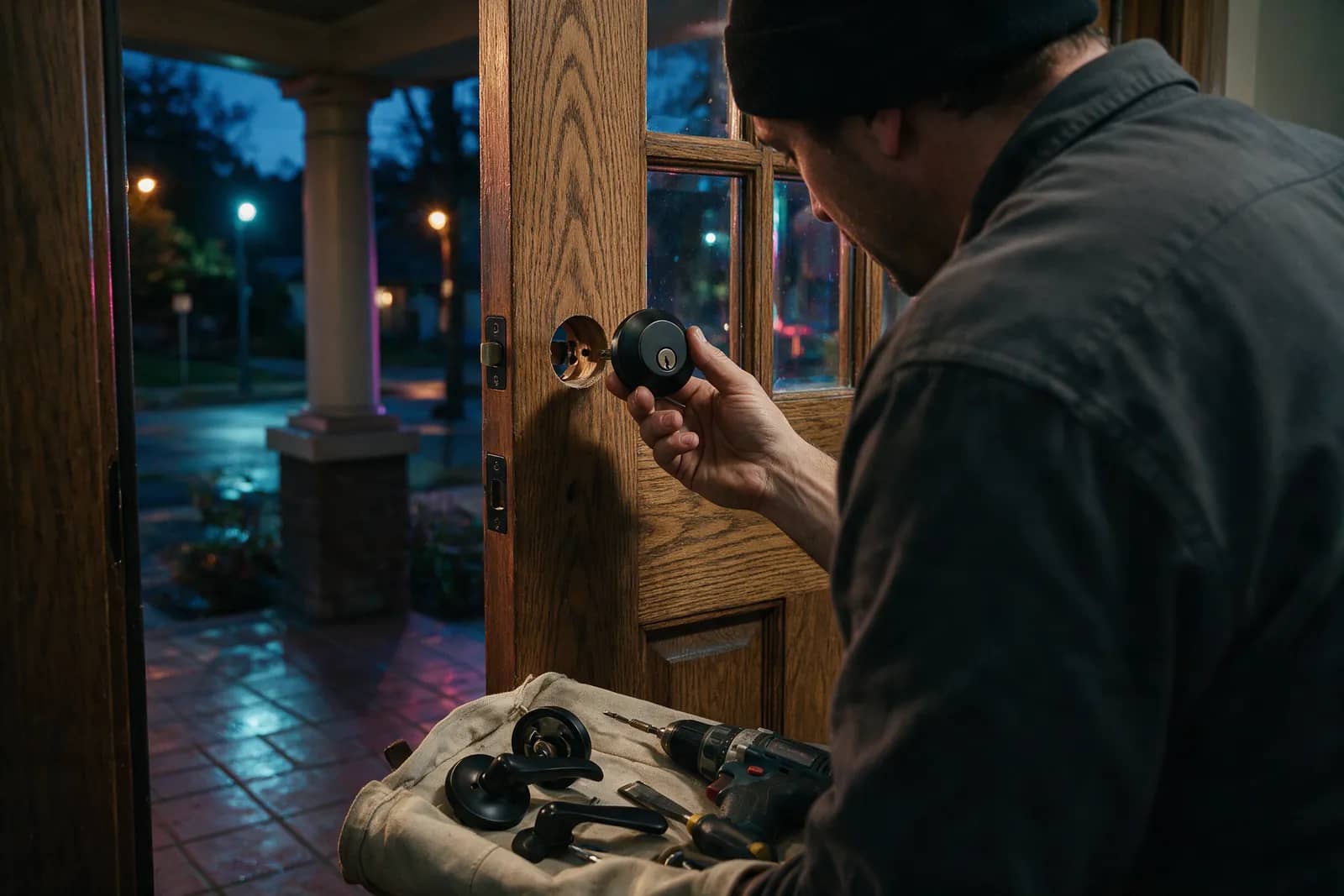
Replacement is the answer when the case is cracked, the bolt is bent from a forced entry, or the cylinder is a proprietary type from a defunct maker with no parts. Modern mortise locks fit the same pocket, and a Craftsman door takes one with a period trim without any change to its face. What you do not want is a contractor filling the mortise pocket with wood and boring two round holes through a solid old-growth stile. That destroys a door worth more than the lock.
Adding a deadbolt without wrecking the stile
Many owners want a second bolt above the mortise, and that is reasonable. The way to do it is to measure the stile, keep the new bore clear of the mortise pocket and the original strike, and use a deadbolt with a narrow backset if the stile is thin. Done carefully, the door gains a Grade 1 bolt and keeps its mortise set below it, both on the same key if the keyways match. Done carelessly, the bore breaks into the mortise pocket and the door needs a woodworker.
On the jamb side, the new strike goes into the frame with three-inch screws into the stud, and the old mortise strike gets the same treatment while the tech is there. Craftsman door frames are solid but the screws holding the original strikes are short and often stripped. That single change, on a door that has never been kicked, is most of the security gain for the price of a few screws.
Locked out by a mortise lock
The mortise lockout in Rockridge is usually not a lost key. It is a bolt that seized in the case while the owner was out, or a knob spindle that snapped so the latch will not retract from outside. Those are a house lockout at $105 to $185, and the tech works the lock open without damage first: through the cylinder if there is one, or by working the latch and bolt from the edge on a case that has simply gummed up. The drill is a last resort, taken only with your yes and only at the locked rate.
Arrival to Rockridge runs about twenty minutes and to Temescal about eighteen, and a mortise case that has seized often needs the cleaning described above to keep it from doing so again next month. Say on the call that the door has a mortise or a rim lock. The van carries cylinders and parts for old hardware, but knowing in advance means the right ones are on board on the first trip.
Rim locks, glass knobs and the parts problem
The honest limit on old hardware is parts. Glass knobs, cast-brass escutcheons and the odd mortise case from a maker that closed in 1935 cannot be bought new. Springs, spindles, set screws and standard cylinders can, and a good salvage yard supplies much of the rest. A locksmith who works these houses regularly keeps a drawer of period parts and will say plainly when a case is beyond saving rather than nurse it through one more winter.
The practical goal for a Craftsman owner in Rockridge or Temescal is a door that opens smoothly, locks with a modern cylinder on the bolt that matters, has a strike set into the framing, and looks the way it did in 1915 from the sidewalk. That is achievable on nearly every house on the street, and it costs a great deal less than a new door.
Quick answers
Can an original mortise lock be rekeyed?+
If it has a standard pin cylinder, yes, at $21 to $36 per cylinder, with the original case left in the door. If it takes only a warded skeleton key, there is nothing to rekey, and the answer is a modern cylinder or a deadbolt added above it.
Will adding a deadbolt damage a Craftsman door?+
Not if the bore is placed clear of the mortise pocket and the stile is measured first. A narrow-backset deadbolt fits thin stiles, and the new strike goes into the frame with long screws. The tech will say if a particular door is too thin for a second bolt.
What does a seized mortise lock cost to open?+
It is a house lockout at $105 to $185, opened without damage first. If the case needs cleaning and a new spring to stop it seizing again, that repair is priced at the low end of the $99 to $275 range and can be done on the same visit.
Need it handled rather than read about?
(510) 561-0782More guides